

How Market Odds Change: The Story Behind Every Price Move
Ever wondered why betting odds fluctuate so much before an event? Discover the hidden forces and expert strategies that drive odds movement, from breaking news to market sentiment, and learn how to leverage this knowledge on platforms like TradeBanta.
Introduction
In the dynamic world of prediction markets and sports betting, one of the most intriguing phenomena is the constant fluctuation of odds. A team that was a strong favorite yesterday might see its odds lengthen significantly by game day, or a seemingly outlandish prediction might gain traction, causing its market price to shift dramatically. Understanding how market odds change is not just about curiosity; it's a crucial skill for anyone looking to make informed decisions and potentially profit from these markets. This article will demystify the forces behind odds movement, giving you a comprehensive look at the mechanics, the players involved, and how you can interpret these shifts to your advantage.
Prediction markets, much like traditional financial markets, are ecosystems where information is constantly being processed and reflected in prices. Every piece of new data, every shift in sentiment, and every large trade has the potential to move the needle. For participants on platforms like TradeBanta, recognizing these patterns and understanding their underlying causes can transform a casual interest into a strategic approach.
The Role of Market Makers and Initial Odds Setting
Before any market activity begins, the initial odds or prices are set. This crucial first step is typically handled by "market makers" or sophisticated algorithms employed by prediction platforms and bookmakers. Their primary goal is to create a balanced market that attracts participation on both sides of an outcome, minimizing their own risk while ensuring liquidity. They achieve this by analyzing a vast array of data points.
This data includes historical performance, team news, player injuries, statistical models, expert opinions, and even public sentiment. For a football match in Nigeria, for instance, a market maker would consider recent league standings, head-to-head records, home advantage, and the current form of key players. They then assign a probability to each possible outcome and convert these probabilities into initial odds, often incorporating a margin (or "vig") to ensure profitability regardless of the outcome.
Information Asymmetry and News Impact on Odds
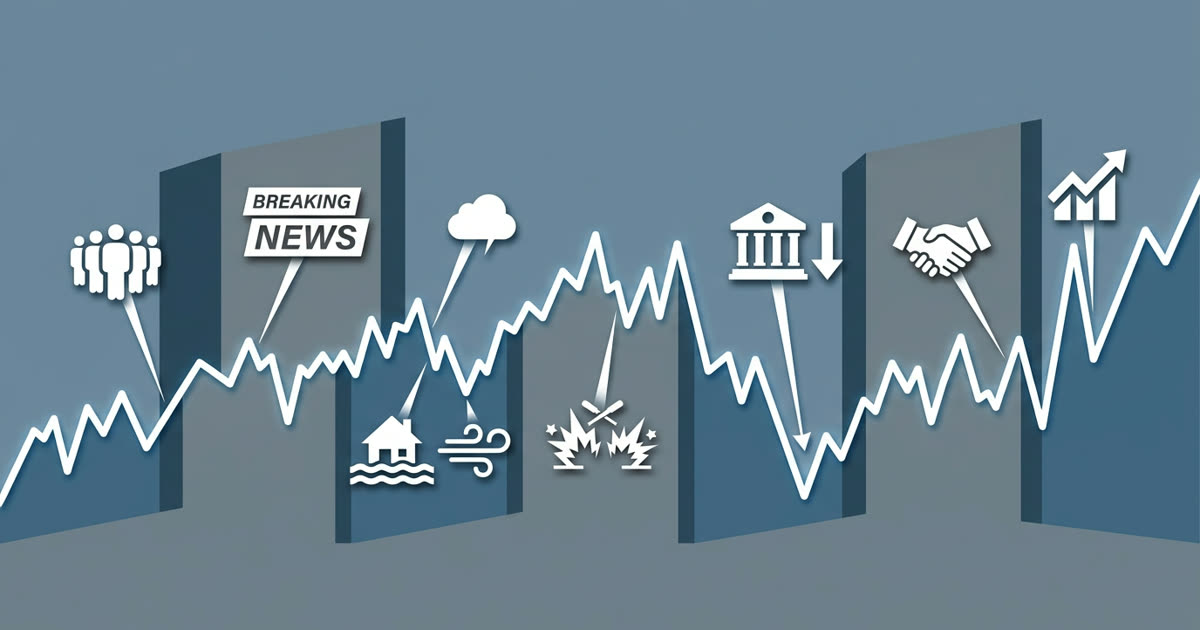
One of the most significant drivers of how market odds change is the flow of new information. Prediction markets are efficient at incorporating new data almost instantaneously. When unforeseen events occur, such as a star player's injury announcement, a change in weather conditions, or a political scandal, the market reacts swiftly.
Consider a scenario in a sports market: a major player on a favored team is suddenly ruled out due to illness just hours before a match. This new information immediately reduces the perceived probability of that team winning. Consequently, their odds will lengthen (their price will decrease), while the opposing team's odds will shorten (their price will increase). Similarly, in a political prediction market about an election in an African country, an unexpected endorsement from a popular figure could cause a candidate's odds to shorten dramatically. The market, in essence, is re-evaluating the probabilities based on this fresh, impactful data.
The Influence of Public Betting Volume and Liquidity
Beyond breaking news, the sheer volume and direction of public betting activity play a massive role in how market odds change. When a significant amount of money is placed on one particular outcome, market makers often adjust the odds to encourage betting on the other side. This is a mechanism to rebalance their books and reduce their exposure to risk.
For example, if a large number of participants on TradeBanta are predicting that a certain company's stock will rise, the odds for that outcome will shorten (price increases), making it less attractive, while the odds for the stock to fall will lengthen (price decreases), making it more appealing. This continuous adjustment based on liquidity and demand helps maintain a balanced market. A market with high liquidity—meaning many participants and active trading—tends to have more stable odds, as large individual bets have less impact. Conversely, in thinly traded markets, even small bets can cause significant odds movement.
Algorithmic Trading and Sophisticated Strategies
In modern prediction markets, just like financial markets, a substantial portion of trading volume comes from automated systems and sophisticated algorithms. These algorithms are designed to detect inefficiencies, react to news faster than humans, and execute trades based on complex statistical models. They can contribute significantly to how market odds change.
These algorithms might employ strategies like arbitrage (exploiting small price differences across different platforms), high-frequency trading (making numerous small trades at lightning speed), or following momentum. Their presence means that odds adjustments can happen in milliseconds, making it challenging for human traders to react as quickly. However, understanding that these forces are at play can help human participants avoid being caught on the wrong side of a rapid market shift and instead look for opportunities that algorithms might miss, such as nuanced qualitative information.
Psychological Factors and Market Sentiment
While data and algorithms are crucial, human psychology and collective market sentiment also undeniably influence how market odds change. Fear, greed, herd mentality, and overconfidence can lead to irrational price movements that deviate from fundamental probabilities.
During a major event, if a particular narrative gains widespread popularity, even without concrete new information, the market might lean heavily towards one outcome. This can create a "bandwagon effect," where more people jump on board, further shortening the odds for that outcome. Conversely, a sudden panic or loss of confidence can cause a swift price decline. Savvy participants understand that these psychological biases can sometimes create opportunities, as the market may temporarily overreact or underreact to certain events, presenting a chance to bet against the prevailing, potentially irrational, sentiment.
Understanding Implied Probability and Value Betting
Every set of odds in a prediction market corresponds to an "implied probability." For example, odds of 2.00 (or Evens) imply a 50% chance of an event occurring (1 / 2.00 = 0.50). Odds of 4.00 imply a 25% chance (1 / 4.00 = 0.25). Understanding this conversion is fundamental to assessing how market odds change and identifying value.
"Value betting" involves identifying situations where you believe the true probability of an outcome is higher than the implied probability offered by the market odds. If you calculate an outcome has a 60% chance of happening, but the market offers odds implying only a 50% chance (e.g., 2.00), you have found a value bet. As odds change, the perceived value also shifts. Constantly re-evaluating implied probabilities against your own assessment of true probabilities is key to long-term success in prediction markets.
Frequently Asked Questions
Q: Do odds always move towards the "correct" outcome?
A: Not necessarily. While markets are generally efficient at incorporating information, they can be influenced by biases, irrational exuberance, or thin liquidity, leading to temporary mispricings. Over the long run, however, well-functioning markets tend to reflect fundamental probabilities more accurately.
Q: How quickly do odds change on platforms like TradeBanta?
A: Odds can change in real-time, sometimes within seconds, especially in response to breaking news or significant trading volume. High-profile events often see more rapid and frequent adjustments.
Q: Can I use odds movement to predict future changes?
A: Observing consistent odds movement in one direction can sometimes indicate a strengthening trend or new information being priced in. However, predicting the exact trajectory is challenging, as new information can always reverse a trend. It's more effective to understand why odds are moving rather than just that they are moving.
Why TradeBanta: Your Platform for Informed Predictions
TradeBanta is designed to provide a transparent and engaging environment for participants to engage with prediction markets. By understanding how market odds change, you're better equipped to participate effectively. Our platform offers clear market interfaces, allowing you to track odds movement in real-time and make informed decisions. We strive to provide a fair and accessible marketplace where your insights into market dynamics can be rewarded.
Whether you're tracking the odds of a major sporting event or anticipating the outcome of a significant economic indicator, TradeBanta empowers you with the tools to analyze market shifts. Our commitment to simplicity and user experience means you can focus on deciphering the story behind every price move, without getting bogged down by complex interfaces.
Conclusion
The movement of market odds is a fascinating reflection of collective human knowledge, information processing, and psychological dynamics. From the initial setting by market makers to the instantaneous reactions to breaking news, the influence of public betting, and the sophisticated strategies of algorithms, every shift tells a story. By diligently observing these changes, understanding their underlying causes, and continuously refining your own assessment of probabilities, you can gain a significant edge.
Platforms like TradeBanta offer the perfect arena to apply this knowledge. By paying close attention to how market odds change, you're not just predicting; you're engaging with a living, breathing market that constantly evolves. Embrace the dynamism, learn from every shift, and let your informed predictions lead the way.
Now put what you just learned about how market odds change to work.
Live Sports markets are open on TradeBanta — turn the read into a real position.
Related reading

How Market Prices Predict the Future
Ever wonder how prediction market prices seem to peek into tomorrow? Discover how the collective wisdom of participants transforms market prices into powerful forecasts for future events, offering insights far beyond traditional polling.

Reading Market Odds Like a Trader
Ever wondered how prediction markets translate complex events into simple 'Yes' or 'No' odds? Understanding these odds is key to making informed trading decisions.

Super Eagles and NPFL Prediction Markets: Where Local Knowledge Pays
How to trade Nigerian football markets — reading team news before the price moves, in-play cash-out, and why the NPFL is the most mispriced league you follow.