

Prediction Markets Around the World: A Regional Snapshot
Curious about how people worldwide forecast future events? Explore the global landscape of prediction markets, from political outcomes to economic trends, and discover their impact.
Introduction
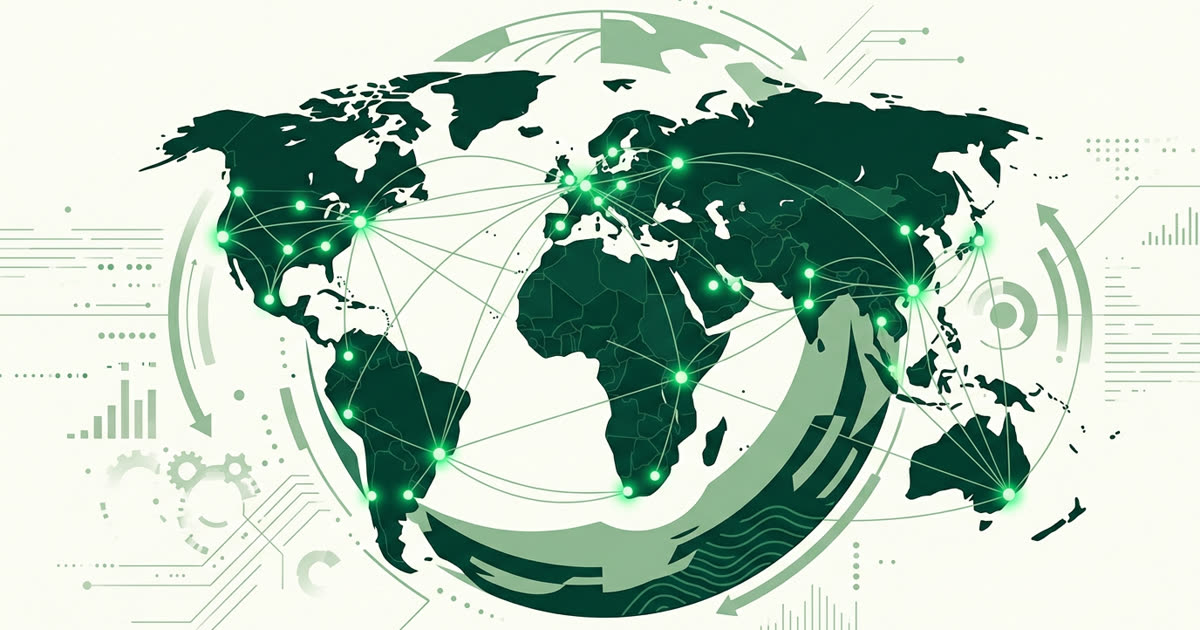
Prediction markets are fascinating platforms where participants trade on the outcomes of future events. Think of them as exchanges where you can buy or sell shares in a specific event happening, much like stocks. The price of these shares reflects the crowd's aggregated belief about the probability of that event occurring. For instance, if a share for "Candidate X wins election" is trading at ₦70 (70 cents on the naira), it implies a 70% perceived probability of that outcome. This innovative approach to forecasting is gaining traction globally, offering unique insights beyond traditional polling or expert opinions.
From political elections to economic indicators, sports results, and even scientific breakthroughs, prediction markets tap into the collective wisdom of diverse participants. Unlike traditional betting, where the odds are often set by a bookmaker, prediction markets are dynamic, with prices constantly adjusting based on new information and participant sentiment. This article will take you on a journey through the global landscape of prediction markets, exploring their applications, regional variations, and the exciting potential they hold.
Understanding the Core Mechanics of Prediction Markets
At their heart, prediction markets operate on simple principles: participants buy and sell contracts whose value depends on the outcome of a future event. If you believe an event is more likely to happen than its current price suggests, you buy shares. If you think it's less likely, you sell. As more people trade, the price converges on what the market collectively believes is the true probability. This aggregation of information from many independent participants often leads to remarkably accurate forecasts.
These markets are typically structured around binary outcomes (yes/no) or multiple-choice options. For example, a market might ask, "Will the Central Bank of Nigeria raise interest rates in the next quarter?" Participants can buy "Yes" or "No" shares. If "Yes" shares hit ₦100 (₦1.00), they pay out ₦100 if the event occurs and ₦0 if it doesn't. The difference between the purchase price and the payout is the profit or loss. This mechanism incentivizes participants to bring their best information and judgment to the market, as accurate predictions lead to financial gains.
Prediction Markets in North America: A Hub of Innovation
North America, particularly the United States, has been a significant hotbed for prediction market development and research. Platforms like PredictIt (until its recent shutdown for new markets) and Iowa Electronic Markets (IEM) have long been used for academic study and public engagement, especially concerning political outcomes. The IEM, for example, has an impressive track record of accurately predicting US presidential elections, often outperforming traditional polls.
Beyond politics, North American prediction markets have explored diverse areas, including entertainment awards, economic data releases, and even public health events. The legal landscape in the US has historically been complex, with regulatory bodies like the CFTC (Commodity Futures Trading Commission) overseeing these markets. This regulatory scrutiny has shaped their evolution, pushing some towards academic or non-profit models, while others operate under specific exemptions. The interest in leveraging prediction markets for corporate forecasting and internal decision-making is also growing in the region.
Europe's Evolving Prediction Market Scene
Europe presents a diverse and evolving landscape for prediction markets. While perhaps not as overtly prominent as in the US, various platforms and research initiatives are active across the continent. Countries like the UK have seen an interplay between traditional betting markets and more prediction-market-like platforms, especially around political events like general elections or referendums.
In academic and corporate settings, European institutions and businesses are increasingly exploring the utility of internal prediction markets for strategic planning, project management, and innovation forecasting. The regulatory environment varies significantly from country to country, influencing the types of markets that can operate and their accessibility to the general public. As digital innovation continues, we anticipate further growth and adaptation of prediction market models across European nations.
The Rise of Prediction Markets in Africa, with a Focus on Nigeria
Africa is emerging as a dynamic frontier for prediction markets, with Nigeria at the forefront of this innovation. The continent's youthful population, high mobile penetration, and burgeoning tech ecosystem create fertile ground for new digital platforms. Prediction markets offer an exciting opportunity for engagement, education, and even economic participation, especially in economies where traditional investment avenues might be less accessible.
In Nigeria, platforms like TradeBanta are pioneering simplified prediction marketplaces tailored to the local context. These platforms allow Nigerians to predict outcomes on local and global events, from election results and sports to commodity prices and entertainment. The appeal lies in the ability to participate with small stakes, learn about market dynamics, and potentially earn rewards based on accurate forecasts. This localized approach is crucial for fostering adoption and relevance, making prediction markets accessible and understandable to a broader audience.
Asia and Beyond: Diverse Applications and Cultural Nuances
Across Asia, prediction markets are finding unique applications, often influenced by regional cultures and regulatory frameworks. In some countries, they might be more focused on sports outcomes or entertainment, while in others, there's a growing interest in using them for economic forecasting or policy evaluation. The rapid technological adoption in many Asian nations provides a strong foundation for the growth of digital prediction platforms.
Beyond these major regions, prediction markets are also being explored in other parts of the world, including Latin America and Australia. The global trend is clear: as the understanding of collective intelligence deepens and digital platforms become more sophisticated, prediction markets are increasingly recognized as powerful tools for aggregating information and generating accurate forecasts across a myriad of domains.
The Ethical Considerations and Future Potential
While prediction markets offer immense potential, they also raise important ethical considerations. Questions around market manipulation, insider trading, and the potential impact on public discourse need careful consideration. Responsible platform design, transparent rules, and robust regulatory oversight are crucial for ensuring the integrity and fairness of these markets. As the industry matures, these aspects will become even more critical.
Looking ahead, the future of prediction markets is bright. Advancements in blockchain technology could bring greater transparency and decentralization, while AI could enhance market design and participant experience. We could see prediction markets becoming integral tools for governments, businesses, and individuals to make more informed decisions, predict crises, and even incentivize innovation. Their ability to distill complex information into actionable probabilities is an invaluable asset in an increasingly uncertain world.
Why TradeBanta is Leading the Way in Africa
TradeBanta stands out as a leading platform bringing the power of prediction markets to Africa, starting with Nigeria. Our mission is to make forecasting accessible, engaging, and rewarding for everyone. We understand the local context and have designed TradeBanta to be intuitive and easy to use, allowing participants to predict outcomes on events that matter to them, with clear rules and transparent payouts.
We offer a simplified experience, removing the complexities often associated with traditional financial markets, while still providing the core benefits of aggregated intelligence. By focusing on local relevance and user education, TradeBanta is not just a platform for predictions; it's a tool for learning about market dynamics, fostering critical thinking, and engaging with current events in a meaningful way. Join TradeBanta today and be part of the future of forecasting in Africa.
Conclusion
Prediction markets are a testament to the power of collective intelligence, offering a unique and often more accurate alternative to traditional forecasting methods. From the academic rigor of North American markets to the burgeoning innovation in Africa and the diverse applications across Asia and Europe, their global footprint is expanding.
As technology advances and regulatory frameworks adapt, these markets are poised to play an even more significant role in shaping our understanding of future events. Platforms like TradeBanta are democratizing access to this powerful tool, empowering individuals worldwide to participate in the fascinating world of forecasting. The journey of prediction markets around the world is just beginning, and their potential to inform, engage, and even transform decision-making is boundless.
Now put what you just learned about prediction markets around the world to work.
Live Prediction Markets markets are open on TradeBanta — turn the read into a real position.
Related reading

How to Evaluate a Prediction Market Platform (What Actually Matters)
Navigating the world of prediction markets can be daunting. Discover what truly separates the best prediction market platforms from the rest, ensuring you make informed decisions and maximize your trading potential.

The Future of Prediction Markets: What the Next Decade Looks Like
Curious about the next big thing in forecasting? Explore how technology, AI, and global events are shaping the future of prediction markets, offering unparalleled insights and investment opportunities.
Prediction Markets in Ghana, Kenya and South Africa: A Practical Guide
How prediction markets work for traders in Ghana, Kenya and South Africa — pricing, funding, currency, early cash-out and what to check locally.