

Prediction Market vs Stock Market vs Betting Exchange
Three places where a price comes from other people — and the differences that actually change how you trade: what you own, when it ends, and how you get paid.
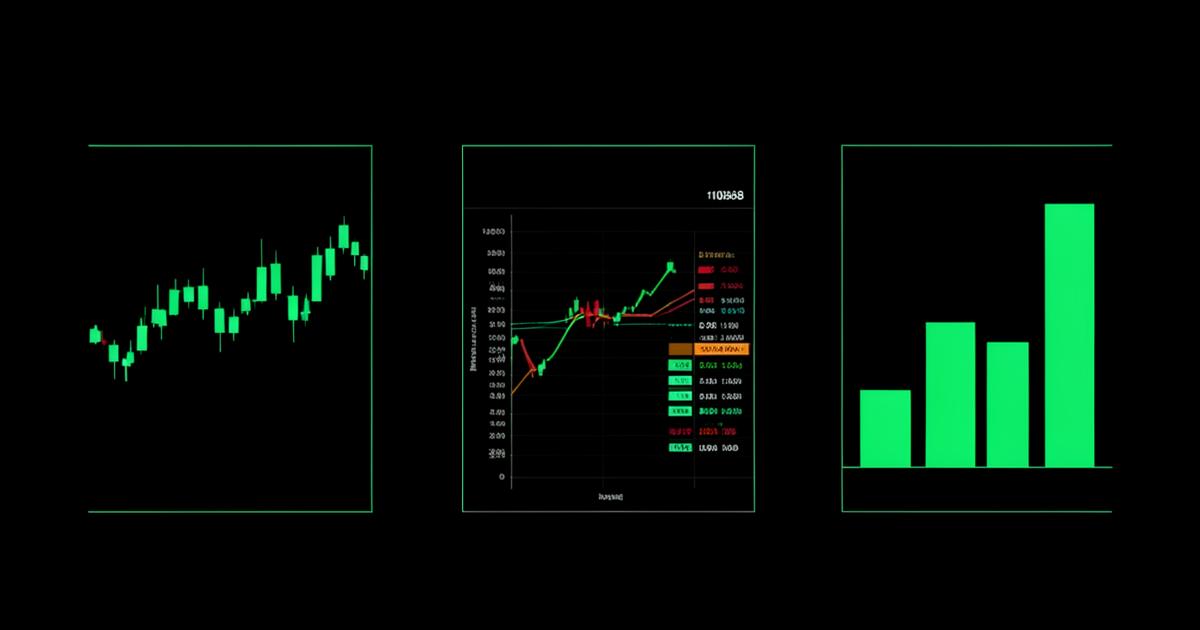
Same idea, three different instruments
All three let you take a position at a price other people set. What separates them is what you actually hold, how long you hold it, and what settles it.
What you own
- Stock market: a share of a company. It has no end date, and its value depends on earnings, sentiment and everything else forever.
- Prediction market: a claim on a specific question. YES or NO on something that will be settled by evidence at a known point.
- Betting exchange: a matched wager on an event, priced as odds rather than probability.
The practical consequence: a prediction market has a defined finish line. You are never waiting indefinitely to find out whether you were right.
How the price reads
A prediction market price is a probability. 62% means the crowd expects it about six times in ten. That makes it directly comparable with your own estimate — which is the whole point.
A share price is a valuation, not a probability. Exchange odds are a probability wearing a disguise: 2.50 decimal odds implies about 40%, but you have to convert before you can reason about it.
Where the counterparty sits
- Stock market: other investors, via a broker.
- Prediction market: other traders taking the opposite side of the same question.
- Betting exchange: other bettors, matched by the platform, which takes commission.
- Bookmaker (for contrast): the house itself, with a margin built into every price.
If a house sets the price, the price is not a clean forecast. In prediction markets and exchanges, it is closer.
Exit and settlement
| | Ends? | Exit early? | Settles on | |---|---|---|---| | Stock | No | Yes, any time | Nothing — you sell | | Prediction market | Yes, at resolution | Yes, cash out | A stated evidence source | | Betting exchange | Yes, at event end | Sometimes | Event result |
Early exit is what makes both prediction markets and exchanges feel like trading. Cashing out at 68% instead of holding to 0 or 100 is a decision about the price, not about the outcome.
Which one suits what you know
- You understand a company's business. Stocks.
- You have specific knowledge about a specific upcoming outcome — a match, an election, a release date. Prediction markets. Your information has a deadline, and so does the instrument.
- You mainly want sport results at odds. An exchange does that, without the probability framing or the wider range of questions.
The practical case for prediction markets
Your knowledge is usually about events, not valuations. You know who is injured, how a policy will land, whether a release date will slip. A prediction market is the instrument shaped like that knowledge: one question, one deadline, a probability you can disagree with, and the option to leave early.
You can still lose your stake. The point is not lower risk — it is risk you can read and manage.
Next: [how to read a prediction market price](/blog/read-a-prediction-market-price) · [prediction market vs betting](/blog/prediction-market-vs-betting).
Now put what you just learned about prediction market vs stock market to work.
Live Prediction Markets markets are open on TradeBanta — turn the read into a real position.
Related reading

Prediction Market vs Betting: What Actually Makes Them Different
Ever wondered if prediction markets are just fancy betting? This article unravels the core distinctions between prediction markets and traditional betting, revealing how they empower informed decision-making and offer unique opportunities.

How to Read a Prediction Market Price in Ten Seconds
A price is a probability, a payout and an opinion at once. Here is how to read all three instantly — and the three mistakes that cost beginners the most.
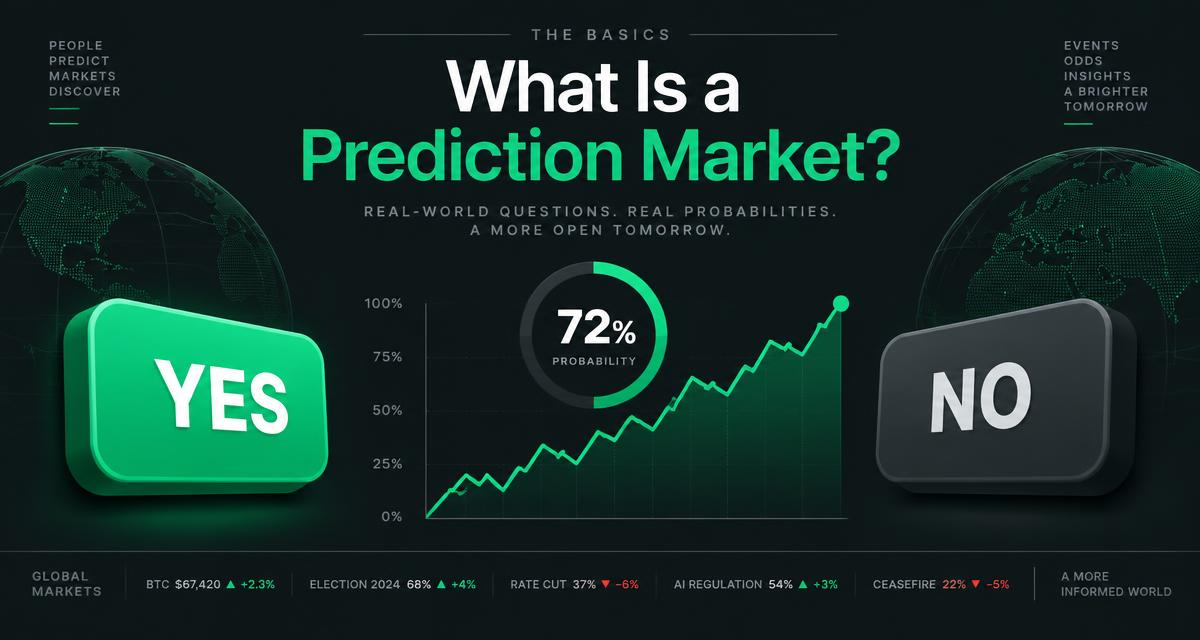
What Is a Prediction Market? A Beginner's Guide
Prediction markets let you trade on the outcome of real-world events — from football to elections. Here's how they work, and how to place your first position on Tradebanta.